Showing posts with label Christmas. Show all posts

Sunday, 15 January 2017

We are now on Instagram


Cinderella Clock made for a display

I am always late for everything in life preferring to hold back and wait and see before testing the waters myself.

Some years ago when the husband and I were buying a property we registered with an  estate agent who simply could not believe that we did not possess a mobile phone between us. She thought we were lying to her.

Since those days which do seem rather a long time ago now we have been dragged (sometimes screaming) into the modern age by younger friends and family members who despair of our dusty hermit like habits. Time moves on and though Blogger was once a favourite place for us all to meet many have found a new cafĂ© in Instagram which is quicker to use, and you can take it with you! I resisted for ages, but in the end was completely won over by the vast amount of absolutely beautiful images that people share.

Vienna cafe
 I can take an around the world trip in just a few minutes while having a cup of tea and then return to the real world instead of spending hours over posting a piece on Blogger.

Am I leaving Blogger? No, but I cannot pretend that I have as much time as I would like to post and to visit fellow bloggers who I so admire, and so, if you want to follow me more closely I would be honoured if any of you pop over to Instagram and become friends there. Link at the bottom of the post, and in the sidebar. You can still enjoy the galleries on instagram without posting.

While I have been away from Blogger I've not been idle. We have now been at the wonderful old building, The Emporium in Hungerford, for seven years! The shop is doing well and keeping me very busy buying, renovating, inventing and selling. And our poor old rickety cottage continues to vex us trying to keep it upright.

The Emporium in Hungerford, Berkshire
 I've travelled a bit

From a painting at Watts Gallery
renewing my love of the magical places in This Sceptred Isle which first caught my imagination,

Tinsmiths, Ledbury, their magical alley
Step back in time
18 Folgate Street, Spitalfields, London

Thatched cottages in local villages

and fallen in love with another European city, Oh Vienna. I shall return.

Baroque Heaven, look up in Vienna

Art Nouveau everywhere too
The exquisite Secession House
More amazing roof, St Stephens Cathedral

 It was lovely to travel, and so good to come home. 


The tall dark and handsome man I'd given my heart to awhile back has done amazing things and become a superstar. In my time I have been bewitched by many special thoroughbreds and could not have hoped that another creature so enchanting would gallop into my life ~ and yet, there he is.Thistlecrack.

Thistlecrack trained in Somerset by Colin Tizzard,
and ridden byTom Scudamore,
out on their own

I've read a LOT of wonderful books. I hope to post a few soon so that if you have not read them and find them interesting you can look out for them too.

Puff has her own ideas about what we read!
The Last Days of Leda Grey by Essie Fox
fascinating look at the world of silent films
Wonderful Edna! 

Sadly we had to say farewell to our beloved lodger, little raggedy man Munchkin whose bravery in his illness touched all who knew him.

Our Lionheart
Munchkin LeStrange
We had a wonderful Christmas in Devon with the family together for a change, and hope that you enjoyed the holiday season whatever that you believe, and where ever that you may be in the world.


These times are very trying for so many people. Yet with January here and Spring not far behind I do feel positive for the first time in a long while. We can endure.


Find us on instagram Here: discardedtreasures

Wednesday, 16 December 2015

in the Company of Wolves

A mystical version of Santa Claus
from Arthur Rackham's Book of Pictures published in 1913.
This painting was done in 1907, pen, ink & watercolour on paper, and is in a Private Collection.
Photo © Chris Beetles Ltd, London / The Bridgeman Art Library

I've long been fascinated by the symbolism of the colour red in folklore and how this permeates into our daily life, often without us realising.  At this time of year if we think of red, it will be Santa Claus whose red costume springs to the mind of a lot of people.

Stag hook with red stone and red + blue wool blanket.
From Plumo.
There is something comforting about red in the dark winter months. The glow of a fiery hearth warming our homes and soft wool blankets and throws. And who does not love a red winter coat? Bright red ribbons tied around lovingly given Christmas presents. Shiny red glass ornaments hung on a tree, and the lush red berries of holy in wreaths, and dropped in the snow. If we are lucky enough to live where they do we may even see the Red Cardinal. Here in England we are charmed by the tiny but fierce Robin with it's red breast and he adorns many a Christmas card as well as being England's national bird.

Robin and holly
Red is a complex colour and has another, more dangerous side and many associations with myth and magic. As Autumn turns to Winter and the trees shake their colourful leaf cloaks to the ground my thoughts always turn to the woods. I love the architectural shape of bare trees and the idea that you may just glimpse something magical there in the woods which at other times of the year would be hidden to your view. We may dream of Unicorns, but If we are very lucky we might really see a White Hart. I often see the Deer who live in our local woods and I have seen the White Hart in the New Forest and in the royal hunting park near Hampton Court, Bushy Park. 

The Mystic Wood by John William Waterhouse
 But it is the Wolves which I secretly long for. Or at least a ribbon of red cloth, caught on a tree as if someone who had strayed from the path hurried past.
 

All colours have meanings and the power to change our moods. Red is not a colour for wall flowers, it is primal, capable of elicting extreme reactions. How we feel about red today began in the distant past when red was known as the color of fire and blood, associated with Mars the God of war,  and confusingly, both mahesty and liberty, therefore revolutions. It also symbolised passion as the colour of love, and of sin.

Tudor Rose, Elizabethan lady in red velvet,
Robert Dudley Earl of Leicester.
Both majesty and revolutions
Immortal passion. Gary Oldman in the red cloak of Dracula. Terrifying.

Even when used in small amounts it has a potent effect and a deep poignancy. Few colours can evoke such emotion.

This is a celebration of the colour red in a few of it's guises. The history and folklore of red has been academically covered by many and for those who wish to read more serious considerations I have included some links at the bottom of the page and am happy to add more should you know of good sources which I have left out.

I've collected lore about the colour red all of my life and am always delighted when another story appears where red is used. I do love them all.

Alas we have no snow this winter, it is just grey and very wet here in the English countryside. I long for that burst of red against a blanket of white, and this greyness inspired me to share some of my favourite reds.

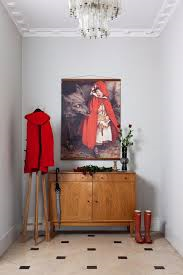
Little Red Riding Hood
Sir John Everett Millais P.R.A.
The model is his daughter
oil on panel, 1864
35.5 by 25cm., 14 by 9¾in.
see bottom of page for details about this painting


Sarah Moon's rendition.
An urban black and white tale of dread.
The model is her daughter
Superb in it's simplicity.


Tribute to Red
from Surface View

The Red Hat, Charles A Buchel, 1910
Imagine winter nights in this

The lore of Apples.

Bette Davis wears a red ball gown in 1938 and ruins her reputation
as ladies should wear white

Scarlett O'Hara on the red stairs
Gone With The Wind 1939

Modern Folklore. David Hemmings drives past the red buildings in Blow Up, 1967.
Sammy Hagar pays tribute with his 'Red' album of the same street scene in 1977.

Angela Carter. The Bloody Chamber, 1979
 new stories from the base of old ones
including In the Company of Wolves which became the Neil Jorden 1984 film

Red Shoes  & Ruby Slippers
The Red Shoes (film 1948), The Wizard Of Oz (film 1939)
Vianne from Chocolat (2000) & The Lollipop Shoes (2007) by Joanne Harris

For sheer poignancy, a real life story
The girl in the red coat
Schindler's List 1993

For some it may be difficult to chose a favourite tale which has red at it's heart, but not for me. Thankfully the legacy lives on as new storytellers weave tales of dread and delight around bright red tendrils.

Modern Red, in the Cotswolds
Have you guessed which tale of red might be my favourite? Yes, it is Little Red Riding Hood. I think the reasons that I like it so much are tied to the Arthur Rackham illustrations which I have had since I was a child. And I love the dual nature of red. I always wonder if this is one of the reasons that the French version with it's sad ending, and the Grimm's version with it's happy ending. both work.

Arthur Rackham
detail from She Met a Wolf
And, in a twist and colour deviation from the red hood there is another lesser known tale which insists that in fact the hood or cape was golden, and enchanted. Andrew Lang included it in his Red Fairy Book, 1890, and called it 'The True History of Little Goldenhood'. His tale was derived from the earlier work of Charles Marelles. This version claims that before now the story has been incorrectly told. Goldenhood is the girl's name as well as her cloak and she is saved not by the huntsman but by the hood which burns the mouth o the wolf as he tries to eat her. You can read this tale in full, follow the links below.

One version of Andrew Lang's Red Fairy Book
bought from Abe's Books Here:

The only known illustration from Golden Hood
you can see clearly she is wearing a hood
and not cloak with a hood.

I tried to photograph a few of my Red Riding Hood pieces which I have collected for years, but Puff the half kitten rather got in the way. She likes to lay amongst them and because she is a magic cat the camera always focusses correctly upon her and not other subjects.

Puff with my Red Riding Hood figures.

This is a detail of the small Staffordshire figure. The Wolf seems rather shy as he is hiding under Red's skirt. This figurine is quite old and has a crack running through the bottom. 

Small Staffordshire 'Red' detail
I like to display a Parrish Relic on the large Parian figure of Red. Jen Parrish uses antique images in her beautiful creations. This one has nothing to do with the tale of Red Riding Hood but I like to combine pieces of Wolf lore with that of Red Riding Hood. Parian is a soft clay and delicate. This piece is missing a paw and a handle of Red's basket. I still love her.

Parian Ware 'Red' adorned by a Parrish Relic of Wolves

My little Red
And a favourite of mine. Tortoiseshell and Calico cats are brave and fierce and like to play in the  woods, real or metaphoric. This little painting was a tribute of the artist to her own Calico who she lost, and to mine. It is very precious to me.


Further reading and sources:

Obviously any self respecting fan of Red, and of Wolves needs to read the tale as recorded firstly Charles Perrault, and later told and retold in different versions by the Brothers Grimm.  The earliest known printed version was called Le Petit Chaperon Rouge, by Charles Perrault and may have had its origins in 17th-century French folklore.  It is believed that it was he who introduced the red hood or cap, but it is not known whether this idea was his own, or came from folklore.

For the alternative tale, The True History of Little Golden Hood from The Red Fairy Book, read more on Tales Of Faerie  Here:and the complete tale on Sur La lune Fairytales Here:

I love the writing of author Joanne Harris and have read, and re-read all of her work. She weaves an intoxicating tale with subtle under and overtures. Her own website is Here:

Being a city girl originally I was immediately struck dumb (and captivated and frightened in equal parts) by the urban depiction of Sarah Moon's Red, Here:

Terri Windling who does not just write about the land of Faerie but embodies it has written so many informative and wondrous pieces on her blog, her article about Red, Here:

Kristin's wonderful site Tales of Faerie and her piece about Red. Here:

Article about Sammy Hagar's Red album and the Blow Up connection,
Here:

The Girl in the red coat, the real story, Here:

Parrish Relics own website, Here:

Surface View who offer wonderful art for your walls and home in all kinds of mediums,
Here:

Red Riding Hood by Sir John Everett Millais P.R.A.

This was sold at Sotheby's in a sale of British and Irish Art, 19 November 2013,for the amount of 98,500 GBP  including the hammer price with the buyer's premium.  
This note is from their catalogue of that sale.

"Painted in 1864, Red Riding Hood depicts the artist's eldest daughter Effie (later Mrs James), aged six, carrying a basket of vegetables and wild flowers, at the door of Grannie's house. It is one of a series of charming portraits of Effie, dressed in various costumes, including My First Sermon and My Second Sermon painted in 1863 and The Minuet of 1866 (private collection). He often used his daughters as models and Effie's sisters Mary and Carrie appear in Waking (Perth Art Gallery) and Sleeping (private collection) of 1865. As has been pointed out, 'With child models readily available Millais was able to give free expression to feelings of parental pride and joy, as well as offer comment on the growth of his offspring, with an eye on the market for endearing images of children.' (Jason Rosenfeld and Alison Smith, Millais, 2007, p.172) Millais was probably inspired to paint Red Riding Hood following the success of James Sant's Little Red Riding Hood of 1860 which had been printed in 1863 in the Illustrated London News as a large chromotype which resulted in the sale of vast numbers of the magazine. The subject was also painted by Watts and Landseer. The moment depicted by Millais captures the tension as Red Riding Hood is about to enter the house to find the wolf dressed in her grand-mother's clothes. However the horror and danger of the story that had been first told by Charles Perrault and retold by the Brothers Grimm, is only implied."

Monday, 2 March 2015

TO WULF HALL


BBC production of Wolf Hall
Claire Foy as Anne Boleyn, Damien Lewis as Henry VIII

Life often does not go according to dreams - or plans, no matter who that we are.

Losing friends and loved ones, or having a serious illness serves to remind us how precious that each moment is and how, whatever our own personal circumstances we need to make the most of what we have and enjoy the good times.

It is a new year and time has flown by once again, including Christmas, while I recovered from illness. I was born with an immune disorder which was not correctly diagnosed until adulthood by which time it had left me with permanent damage. It is why I took early retirement from my corporate employment, and began to turn my leisure activity of collecting and selling vintage items into my full time job. I often struggle to make plans for the future, near or far. Deadlines spin past while I rest and I worry about the inconvenience to others when I must cancel an event or meeting. I acutely feel the distress that not being quite well causes to those close to me. Even a slight cold can keep me from doing anything for several days.


our woodland themed Christmas tree 

I love celebrating the seasons and I managed to get the Christmas tree up and the cottage decorated before taking to my bed. We have three different size and shape faux trees which we alternate. I love the scent of real trees, which reminds me of the pine forests of my childhood but I have always felt a close bond to trees and feel guilty that they must die so we can decorate our homes for a few weeks. I fully understand why so many people chose to have a real tree at Christmas, it is an age old tradition to bring greenery into the home in winter. I have a live tree in the garden which we decorate with fairy lights, but indoors I use trees which have been made of wrapped paper, painted sticks or driftwood.  When we lived in the big house we had all three trees up on December 1st. Wherever that I live I always have one tree, even a tiny one,  with animal decorations only. Sometimes I use fantasy ornaments which I call 'The Bestiary Tree'. This year I did a woodland theme on a prelit berry tree with deer, owl and bear ornaments.


One of my collection of Tudor houses
 
The decorations did not come down until end of January because I was still so ill. I was sad to miss the celebrations of Christmas and New Year but the green baubles and fairy lights cheered the cottage.

Feverish, in my dreams I wandered in the woods and encountered all kinds of beasts.

Grimms Fairy Tales illustration by Vladimir Stankovic

It was a good excuse to catch up on books. I spent it re-reading books which seemed to compliment one another, Grimms Fairy Tales, and Wolf Hall / Bring Up The Bodies.


I have always felt as if I belonged in the past and none more so than in Tudor times and architecture. When I moved to England I relished visiting, and lingering, in Tudor and Elizabethan buildings and gardens.  My family were not close, scattered across America, and none of us had much knowledge of our family history. That is until my Aunt Grace began to write a book about it and she sent me a copy of some of the pages of her manuscript to ask if I would be able to visit locations in England where our ancestors had lived and take some photographs for her. It was an eerie moment when I read the paragraph that proclaimed that my Mother's family were descended from Henry VIII through Mary Boleyn, that other Boleyn girl, sister of ill fated Anne. That Mary's two children were borne of the King, and not her husband William Carey has never been proven, but the idea continues to intrigue historians and often surfaces in novels and films. The Carey's were a large dynasty, we have a very many relatives out there somewhere!

Mary Carey (nee Boleyn) played by Charity Wakefield
 in the BBC production of Wolf Hall

The Carey family had a long link to British royalty, over the years being in and out of favour, beheaded or bequested lavish properties only to have them snatched away in the following generation. One of the sons, probably fleeing further loss of fortunes and their head fled to America and any titles and lands which were once associated with them were lost from them forever.

It was with renewed interest that I read about and visited Tudor locations. In a final twist to the personal connections to me when I met my future husband his Mother ran a hotel in a property which had been built by members of the Carey family. Once upon a time they owned the fairytale like village of Cockington and Torre Abbey which were nearby.

Torre Abbey, Devon, once home to the Carey family.

When Hilary Mantel's book Wolf Hall came out I was living in a remotely located rambling Devon long house with several feral cats and one tame kitten for company.


 My husband worked near London during the week and travelled a lot abroad. Without distractions of set meal times or human company I was able to give my uninterrupted attention to reading Wolf Hall.

a Devon Long house
As anyone who has read it will know, it is a heavy book. I could not put it down once began and for three days and late nights I read on bewitched by it's astonishing power. Often repulsed but unable to look away. I awoke one morning after a particularly fitful night of phantoms to find that I had fallen asleep, open book and snarling cats playing by my side.


We often had power cuts, but this did not stop me reading - the candle light added to the atmosphere wrought by Hilary's vision and skill.


I had read enough real history not to have harboured any romantic pretensions of Tudor times but Wolf Hall plunged me directly into the dangerous and dark (but lustrously bejewelled) world, making the day to day risks of ordinary folk and Lords and Ladies very real. It was a scary time to live, extremely so for any common folk but also if you lived in the circle of the court.

BBC production of Wolf Hall
The Masque
And, it could be said that if you didn't then you did not really live at all. Like a moth to flame, such was (and still is) the power and attraction of Kings in general, and Henry and his court.


BBC production Wolf Hall
Damien Lewis as Henry VIII
 
When we left Devon and our much loved ancient cottage I felt as if I was leaving Wolf Hall behind too. But then I found it again in the area in which we now live as the real Wulfhall was nearby as are several places which Henry visited.  “…we shall visit the Seymours.’  He writes it down.  Early September. Five days.  Wolf Hall.”


Often when historical novels are brought to film they are unable to capture the essence of the book and the better the book the worse the film. I was thrilled to hear that Wolf Hall would be filmed by the BBC. The production has not disappointed. The cast are superb, even though perhaps one or two of the ladies playing the parts are a little prettier than the real women were. It has fully imparted the spirit of the book, and that is the hardest thing to convey. It shows us the lavish clothes the court wore, the jewels and the splendid dwellings, while all the time a foreboding feeling lurks in the shadows. And many shadows there are. I think using period locations rather than studio sets has made all the difference. Some complained about how dark it has been shot, as Director Peter Kosminsky used candlelight in the night scenes, but it just takes me back to when I was reading it, in the beamed cottage by candlelight. The book was astonishing, and so is the film production.

The many stunning locations used for Wolf Hall are well worth a visit and most are open to the public. One of my favourites is the National Trust owned Lacock Abbey in Wiltshire which
stands in for Wolf Hall, home of the Seymour family and where Henry meets Jane while at a hunting party (the real Wolf Hall sadly fell into disrepair and the last of it was pulled down). Laycock Abbey itself has a long and interesting history, founded in the 13th century as an Augustinian nunnery. After Henry had dissolution the monasteries he sold Lacock Abbey to one of his courtiers, Sir William Sharington, who developed it as his family home.

The medieval cloisters of Lacock Abbey were used for the interiors of Wolf Hall. The Great Hall was also used to portray Henry VIII’s bedroom and a banquet room at his lodgings in Calais before he married Anne.

Lacock Abbey in Wiltshire


Cranford, Harry Potter and The Other Boleyn Girl were also shot at Lacock Abbey.


Why 'Wolf Hall'? The Seymour family seat was named with a nod to the Latin saying 'homo homini lupus est': ‘man is a wolf to man’. It is appropriate. Like the Boleyns the Seymours were a family bent on power and more than willing to sacrifice their own to get what they wanted. In part 6, chapter I of Wolf Hall Thomas Cromwell recalls the phrase whilst reflecting on the Duke of Norfolk's hounding of Cardinal Wolsey.

There is no surviving picture of Wolf Hall as King Henry saw it. Wulfhall was a medieval manor house, most likely timber framed with a double courtyard and a tower (which was demolished in 1569), a long gallery and a chapel. Wulfhall was "derelict and abandoned after 1571" as the family had moved out to nearby Tottenham Park. It was used as servant accommodation until seriously reduced in size in the 1660s and finally demolished in 1723.  Some ruins survived until the beginning of the 20th century, but nothing now remains of the once great house. The famous barn, where King Henry and Queen Jane supposedly celebrated their marriage, burnt down in the 1920s. After Queen Jane died, Henry visited the house again in 1539 – and on that occasion Wolf Hall’s great barn (with an inside space 172 feet long by 26 feet wide) was decorated for a banquet. You can pass the spot where Wulfhall was, and a farm of the same name lies near the road.


Hilary in an interview says this about the title and the writing of the book, "The title arrived before a word was written: Wolf Hall, besides being the home of the Seymour family, seemed an apt name for wherever Henry's court resided. But I had no idea what the book would be like, how it would sound. I could see it, rather than hear it: a slow swirling backdrop of jewelled black and gold, a dark glitter at the corner of my eye. I woke one morning with some words in my head: "So now get up." It took a while to work out that this was not an order to get the day under way. It was the first sentence of my novel."

I am not here to judge those times, or anyone who lived in them. There was not a lot of freedom whether you were Catholic or Protestant, and just one of the many shocking aspects of life then is that the common people could have no access to the Bible because it was written in Latin, and translation to English was punishable by death. It always saddens me that so many wondrous architectural treasures were destroyed when Henry dissolved the monasteries, but the church at that time was all powerful and a lot of ordinary people must have felt abandoned by them. 

The story of Anne Boleyn will forever fascinate people, and it is a sad tale to be sure. That these two people who created the greatest British monarch in Elizabeth I could not have known what their union had forged.

A Tudor Princess by L.M Mackenzie


The final scene of the BBC production of Wolf Hall is extremely moving. The often sharp, pouting and spoiled Anne reduced to shivering in the cold giving her death speech. Was she guilty of all accused? Very unlikely.


Credits: BBC/COMPANY PRODUCTIONS LTD throughout for images from their production of Wolf Hall.
Related Posts Plugin for WordPress, Blogger...